

What Makes a Hash Hole? Inside Couchlock’s Rosin-Infused Pre-Roll Process
What Makes a Hash Hole? Inside Couchlock’s Rosin-Infused Pre-Roll Process
Walk into a New Mexico dispensary and ask what the most talked-about pre-roll on the shelf is right now, and odds are good the answer involves a hash hole. It is the format that pulled solventless rosin out of the dab-rig corner of the menu and put it in front of every flower customer in the state. At Couchlock Concentrates, the hash hole is our signature product — and the one we built the brand around.
This piece is for two readers. If you are a consumer trying to figure out what the hash hole pre roll on the menu actually is and whether it is worth the premium over a standard pre-roll, the first half of this post is for you. If you are a New Mexico dispensary buyer evaluating which solventless brands belong on your shelf, the second half is for you. The product is the same either way; the buying questions are different.
What a Hash Hole Actually Is
A hash hole is a pre-roll with a core of solventless hash or rosin running straight down the center, surrounded by ground flower. From the outside it looks like a slightly thicker joint. Light it, and the burn moves through the flower first — but as the cherry travels down the cone, it meets that center column of concentrate, and the smoke shifts. The terpenes get louder. The hit gets heavier. The pre-roll keeps burning slower than a regular joint because rosin doesn’t combust the way flower does.
The format grew out of craft hash culture in the early 2020s, when solventless extraction in the U.S. cannabis market was finally producing rosin clean enough to smoke on its own without rolling it inside flower as a “filler” disguise. Builders started threading a rope of high-quality rosin through the center of a cone instead of dusting kief on the outside, and the construction stuck. The “hole” in the name is literal — the center column of concentrate that runs the length of the pre-roll.
A well-built hash hole is not a gimmick. It is a way to deliver a measured dose of solventless concentrate inside an experience that still smokes, draws, and shares like a regular pre-roll.
Why a Hash Hole Is Different From a Regular Infused Pre-Roll
“Infused pre-roll” is a category that covers a wide range of products, and most of what is sold under that label is not what we are making. The typical infused pre-roll on a New Mexico shelf is flower coated in kief, dusted in distillate, or sprayed with a high-THC liquid concentrate. Those builds raise the potency of a joint, but they do it from the outside in — and they often rely on solvent-extracted material that has been stripped of the terpene profile that made the source flower interesting in the first place.
A hash hole reverses that geometry. The concentrate is on the inside, which means three things matter differently:
- Burn profile. The rosin core slows the burn rate. A hash hole takes longer to smoke than a regular pre-roll of equivalent size — that’s the rosin doing its work.
- Terpene preservation. Solventless rosin holds onto the volatile terpenes that solvent extraction can damage. When the cherry hits the core, you taste the source material, not a flavor wash.
- Price point. Hash holes cost more than standard pre-rolls because the rosin inside them costs more to produce. The economics are honest — you are paying for the concentrate, not for marketing.
If a brand is selling a “hash hole” that is filled with distillate or BHO instead of solventless rosin, it is a hash hole in name only. The format is defined by the extract that goes in it.
Solventless vs Solvent-Extracted: Why Rosin Matters
Rosin is what you get when you apply heat and pressure to cannabis flower or hash and the resin runs out. That’s the whole process. No butane, no propane, no ethanol, no CO2 — just mechanical extraction. What goes in is what comes out: cannabinoids, terpenes, and the lipids and waxes that come with them.
Solvent extraction is the other path. BHO (butane hash oil) and PHO (propane hash oil) pull cannabinoids out of flower by washing it in hydrocarbon solvent and then purging the solvent off. Done correctly by a licensed operator, it produces clean concentrate. Done incorrectly, it leaves residue. Either way, the process is doing chemistry on the plant.
Couchlock makes solventless rosin only. There is no hydrocarbon in our facility. The terminology matters because the categories are easy to blur:
- Live rosin — pressed from fresh-frozen flower (frozen at harvest, never dried). Brightest terpene profile, highest cost to produce.
- Cured rosin — pressed from dried, cured flower. Lower terpene intensity than live, but still solventless and still clean.
- Hash rosin — washed solventless hash (ice water hash) pressed into rosin. The benchmark for premium solventless.
All three are rosin. None of them involve solvent. When a budtender or buyer asks what is in our hash hole, the answer is always solventless — and we will tell you which of the three.
How Couchlock Builds a Hash Hole
The construction of a hash hole sounds simple and isn’t. The sequence — flower selection, rosin production, core insertion, cure, QC — has variables at every step that determine whether the finished pre-roll smokes the way it should.
Flower selection. The outer layer matters more than people think. The flower has to grind cleanly, pack to the right density, and pair with the rosin in the core without fighting it. A loud, terpene-heavy strain on the outside and a contrasting profile on the inside is the classic miss — you end up with two flavors elbowing each other for the whole smoke. Couchlock pairs strains intentionally.
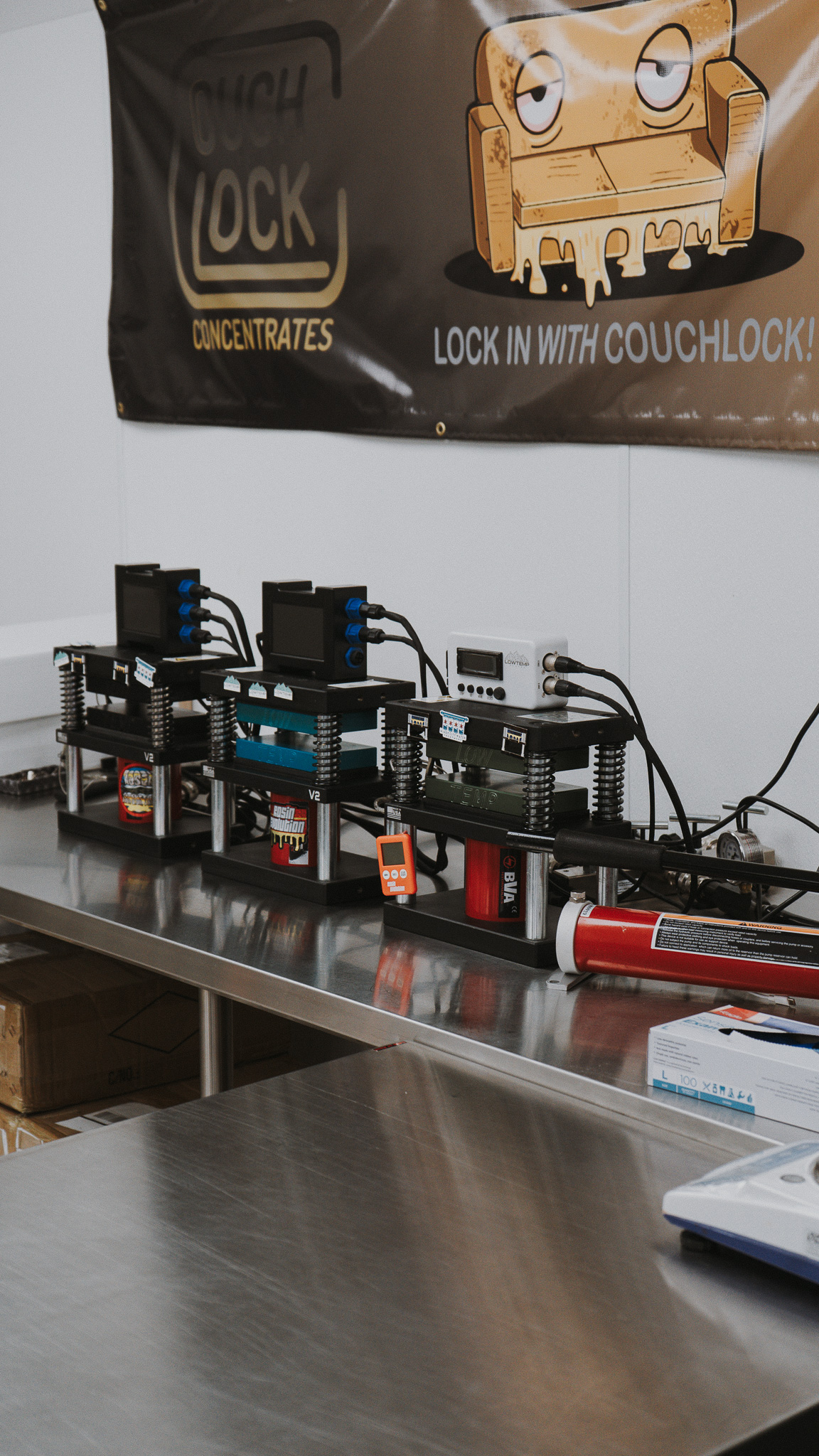
Rosin extraction. Heat and pressure, dialed for the source material. Live rosin gets pressed cold and slow; cured rosin can tolerate slightly different parameters. The rosin then goes through a cure of its own before it is ready to be used as a core.
Core construction. The rosin column has to be the right diameter and the right consistency. Too thin and the burn doesn’t hit it cleanly. Too thick and the pre-roll canoes. Too soft and it migrates through the flower before the customer ever lights it. Too firm and it doesn’t ignite.
Cure and dry. Once the core is in place, the pre-roll rests. This step is what separates a fresh-built hash hole that smokes harshly from one that has settled into itself.
Final QC. Every batch gets pulled apart and inspected before it goes into a tube. Burn test, draw test, visual check on the core integrity. If it doesn’t smoke the way we built it to smoke, it doesn’t ship.
What to Expect When You Smoke One
The first third of a hash hole smokes like a well-built pre-roll — clean draw, clean burn, the flavor of whatever strain is on the outside. Around the midpoint, the cherry reaches the rosin core. The burn slows. The smoke gets denser. The terpenes from the rosin layer in over the top of the flower, and the experience shifts from “smoking flower” to “smoking flower and concentrate together.” It is not a step change — there is no obvious moment where the joint suddenly tastes different. It is a gradient.
One hash hole goes farther than one pre-roll of the same size, both in duration and in effect. We build ours with the assumption that the customer is going to share it or save half for later. That is the format working as intended.
For NM Dispensary Buyers: Stocking Hash Holes
If you are a New Mexico dispensary buyer reading this, the short version is: hash holes belong in your premium pre-roll case, priced and merchandised accordingly. They sell to a different customer than a standard pre-roll — the customer who already knows what live rosin is, the one who reads what is in the tube before they read the price. Stocking solventless hash holes signals that your menu is curated for that buyer, not built only on volume SKUs.
What matters when you are evaluating a hash hole brand for shelf space:
- Solventless verification. Ask. If the answer involves anything other than heat and pressure, it is not a real hash hole.
- Source material transparency. Whose flower? Live, cured, or hash rosin in the core? A brand that won’t answer is a brand whose finished product won’t either.
- Burn consistency. Buyers should test before they stock. A canoeing or unevenly-burning hash hole becomes the customer’s complaint, then yours.
- Batch availability and lead time. Solventless production caps lower than distillate production. A reliable wholesale partner is the one who can tell you honestly what they can produce and when.
Couchlock works directly with New Mexico dispensaries on wholesale partnerships. We are a small-batch operation and we price like one. If you want to talk about a recurring order or a one-time test SKU, our wholesale page covers the basics, and you can reach our wholesale line at info@couchlockconcentrates.com.
Where to Find Couchlock
Couchlock is stocked at independent dispensaries across New Mexico. Our retail footprint is curated — we work with dispensary partners who care about the same things we do — so the shop you walk into matters. The current list of dispensary partners is on our where to buy page, and we keep it updated as new partnerships go live. If you are at a New Mexico dispensary that doesn’t yet carry Couchlock, ask the budtender to bring us in.
To learn more about the brand and the people building it, our about page covers the rest.
Frequently Asked Questions
What is a hash hole pre-roll?
A hash hole is a pre-roll with a center column of solventless hash or rosin running down the middle, surrounded by ground flower. It burns slower than a standard pre-roll because the rosin core doesn’t combust the way flower does, and it delivers concentrate and flower in the same smoke.
What is the difference between a hash hole and an infused pre-roll?
Most “infused” pre-rolls coat the outside of the flower in kief or distillate. A hash hole puts solventless rosin inside the pre-roll as a center core. Different geometry, different burn profile, and — when the core is real solventless rosin — better terpene preservation than a distillate infusion.
Is rosin the same as BHO or other concentrates?
No. Rosin is made with heat and pressure only — no solvents. BHO, PHO, and similar concentrates use hydrocarbon solvents like butane or propane to extract cannabinoids and then purge the solvent. Couchlock makes solventless rosin exclusively.
What’s the difference between live rosin, cured rosin, and hash rosin?
Live rosin is pressed from fresh-frozen flower that was frozen at harvest. Cured rosin is pressed from dried, cured flower. Hash rosin is pressed from solventless ice water hash. All three are solventless; live and hash rosin are generally considered the premium tier.
Are Couchlock hash holes available outside New Mexico?
No. Cannabis remains illegal under federal law to transport across state lines, so all licensed New Mexico cannabis products — including Couchlock — are sold only at licensed New Mexico dispensaries.
Why do hash holes cost more than regular pre-rolls?
The rosin inside a hash hole is significantly more expensive to produce than the flower around it. Solventless extraction yields are lower than solvent-based extraction, and the source material for live and hash rosin is itself a premium input. The price reflects the concentrate, not a markup.
How is a Couchlock hash hole different from other hash holes on the New Mexico market?
We use solventless rosin only, we cure the rosin before it goes into the pre-roll, and we pair the outer flower to the core strain intentionally rather than treating the outside as filler. Every batch is QC’d by hand before it ships.
Can dispensaries buy Couchlock wholesale?
Yes. Couchlock partners with licensed New Mexico dispensaries on small-batch wholesale orders. Buyers can reach our wholesale inbox at info@couchlockconcentrates.com or through the wholesale page on our site.
Find Couchlock at a Dispensary Near You
NM dispensaries interested in carrying Couchlock can reach our wholesale line at info@couchlockconcentrates.com.